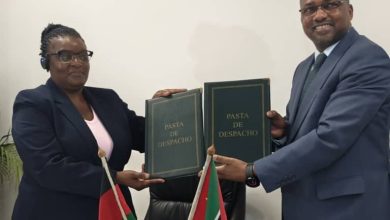
On September 7 last year, Simplex Chithyola Banda marked one year since his appointment as the country’s Minister of Finance and Economic Affairs. In this interview with Ralph Mvona, the minister reflects on his journey, highlighting both the successes achieved and the challenges faced during his tenure. Excepts:
Q: A year into your tenure as Minister of Finance and Economic Affairs, how would you evaluate your performance in navigating the country’s economic challenges?
A: The journey has been both challenging and rewarding as being the Minister of Finance and Economic Affairs requires a delicate balancing act. From the start, my focus has been on stabilising the economy and restoring trust with international partners. We have faced significant challenges, including inflation, rising public debt and revenue constraints.

However, I am proud of the substantial progress we have made. Notably, we successfully qualified for the Extended Credit Facility with the International Monetary Fund [IMF], a critical milestone in regaining international credibility. Additionally, we worked diligently to restore donor confidence, securing vital budget support that had been suspended 13 years ago due to financial mismanagement by previous governments.
While the journey has had its ups and downs, sometimes turbulent, I believe we are on a solid path towards economic recovery. For the first time, Malawi has started benefiting from carbon credits, leveraging carbon markets under Article 6 of the Paris Agreement. These are significant accomplishments, and as a country, we will continue to build on them to take even bigger strides forward. Things are only set to improve.
Q: One of the most significant challenges you have faced is Malawi’s public debt, which has drawn considerable criticism and is often referred to as the “elephant in the room”. Malawi is said to have one of the highest debt levels in Africa. How has your ministry tackled the issue of debt restructuring and what impact do you anticipate this will have on the country’s economic future?
A: Public debt has indeed been one of the biggest challenges we have faced and I acknowledge that it’s a critical issue for Malawi’s economic stability. When I took office, our debt levels were unsustainable, largely due to years of unchecked borrowing and financial mismanagement by previous administrations. We found ourselves in a situation where debt repayment was severely constraining our ability to meet the essential needs of the country.
To address this, my ministry has prioritised debt restructuring as a key component of our economic strategy. We have engaged in extensive negotiations with our major creditors, including countries such as India and China as well as international financial institutions such as the Trade and Development Bank [TDB] and African Export and Import Bank [Afreximbank]. The aim of these discussions has been to secure more favourable repayment terms, lower interest rates and extended repayment periods, giving us the fiscal space we need to manage our economy more effectively.
The impact of these efforts will be profound in the long-term. First, by easing the debt burden, we are freeing up resources that can be redirected toward vital sectors such as healthcare, education, and infrastructure development. This allows us to invest in the future of our country without being crippled by debt servicing costs. Second, by aligning our fiscal policies with sustainable debt management, we are creating a more stable macroeconomic environment, which is crucial for attracting investment and fostering economic growth.
Q: As you have indicated, some donors have returned to providing direct budget support as opposed to off-budget support. Could you elaborate on the broader economic impact of this development?
A: Donor confidence isn’t something that can be regained at the flip of a switch. It requires consistent effort and adherence to best practices. For Malawi to have regained donor confidence after 13 years of setbacks underscores our commitment to rectifying past mismanagement and corruption. The withdrawal of budget support was a clear indication that previous administrations failed to uphold the principles of transparency and accountability, resulting in a lack of trust among our international partners.
Restoring this vital support has immense significance for our economic development. When budget support is available, it alleviates the fiscal pressure on our government, allowing us to provide essential services and invest in critical infrastructure projects such as healthcare, education and transportation. This influx of funding enhances our flexibility in the budgeting process, significantly reducing our reliance on domestic borrowing, which in turn helps stabilise inflation and eases pressure on local interest rates.
Moreover, donor support reflects our partners’ faith in the governance reforms we are implementing. It serves as a catalyst for sustainable development, empowering us to build a robust economy that benefits all Malawians. In essence, regaining donor confidence is not just about securing funds; it is about fostering a renewed partnership based on mutual trust, shared values, and a collective vision for progress.
Q:You mentioned that Malawi has started receiving revenue from carbon credits. What does this development mean for the country’s economy, environmental policy and in dealing with climate change?
A: It is always in the country’s best interest to diversify its revenue streams, and carbon credits are becoming a promising avenue for generating foreign exchange. By tapping into this emerging market, we can bolster our forex reserves, stimulate economic growth, and improve livelihoods across Malawi. The realisation of revenue from carbon credits marks a pivotal moment for the nation under the visionary leadership of President Chakwera.
Through our engagement in global carbon markets, facilitated by the Paris Agreement, we are not only making a meaningful contribution to the fight against climate change, but also securing a sustainable and additional revenue stream. This income will be channelled into projects that promote environmental sustainability and climate resilience, such as large-scale reforestation, biodiversity conservation, and renewable energy development.
The carbon market provides us with a responsible way to monetise our natural resources, aligning economic progress with our long-term goals of diversification and sustainability, as enshrined in Malawi 2063.
Q: How has your approach to economic policy reforms been received by international partners such as the IMF and the World Bank?
A: Over the past 12 months, I have travelled extensively, working tirelessly to secure a better economic future for Malawi. Without wishing to overstate my efforts, Malawi has received significant praise from the IMF and World Bank for our resolute stance on economic reforms. We have been recognised for our effective management of the currency devaluation, a difficult but necessary step to realign the kwacha and address our economic imbalances.
The feedback from our international partners has been overwhelmingly positive. Both the IMF and World Bank have endorsed our efforts, particularly our commitment to fiscal discipline and structural reforms.
Q: Balancing government expenditure while adhering to IMF and World Bank benchmarks is a difficult task. How have you managed to strike this balance?
A: We have made difficult choices such as cutting non-essential expenditures and prioritising critical areas. Simultaneously, we have implemented reforms to enhance revenue collection and improve efficiency in public spending. Our goal is to ensure that fiscal discipline does not compromise development and we have successfully maintained this balance.
We must comply with the fiscal benchmarks established by the IMF and World Bank to secure vital financial support while addressing pressing domestic needs, including social programmes, healthcare, and infrastructure development.
A significant achievement during my tenure as Minister of Finance and Economic Affairs has been strengthening our import cover, increasing it from 0.4 months to nearly two months. This improvement provides a buffer against external economic shocks, such as fluctuations in global commodity prices and sudden disruptions in foreign exchange inflows.
Q: Ensuring the stable supply of essential commodities such as fuel, electricity and fertiliser is critical, especially given global volatility. How have you managed this during your tenure?
A: My ministry has placed a strong emphasis on ensuring the availability of essential products and services such as fuel, electricity and fertilisers for the Malawian populace. We have been instrumental in establishing a reliable supply chain for these strategic commodities, which are vital for both economic stability and growth.
To achieve this goal, we have proactively diversified our sources, reducing dependency on a single supplier and thereby mitigating the risks associated with global price fluctuations.
Q: Looking ahead, what are your primary economic priorities for the coming year, particularly in terms of fiscal reform and stimulating economic growth?
A: Our immediate focus is on consolidating the substantial gains we have achieved in fiscal discipline and economic reforms while intensifying our efforts to address the existing challenges we face. We remain committed to diversifying our economy, with a particular emphasis on critical sectors such as agriculture, mining, and tourism. This strategic approach aligns with our agricultural transformation model and the overarching goals of Malawi 2063.
A key priority is to bolster our foreign exchange reserves, which serve as a crucial buffer against external shocks. Simultaneously, we aim to enhance investor confidence by ensuring policy consistency and creating a more conducive business environment.